

The last month has been a whirlwind. I was back in Arizona for a few weeks for Easter and some meetings, I found my way to New York to visit my girlfriend, and I’m writing this dispatch after a few days of work just north of Dallas, Texas.
There are a lot of exciting projects I’ve been working on, and I’m excited to share some of them in this email update—though many of them will have to wait. Anyways, let’s start with why I’m in Texas:
Everything’s bigger in Texas
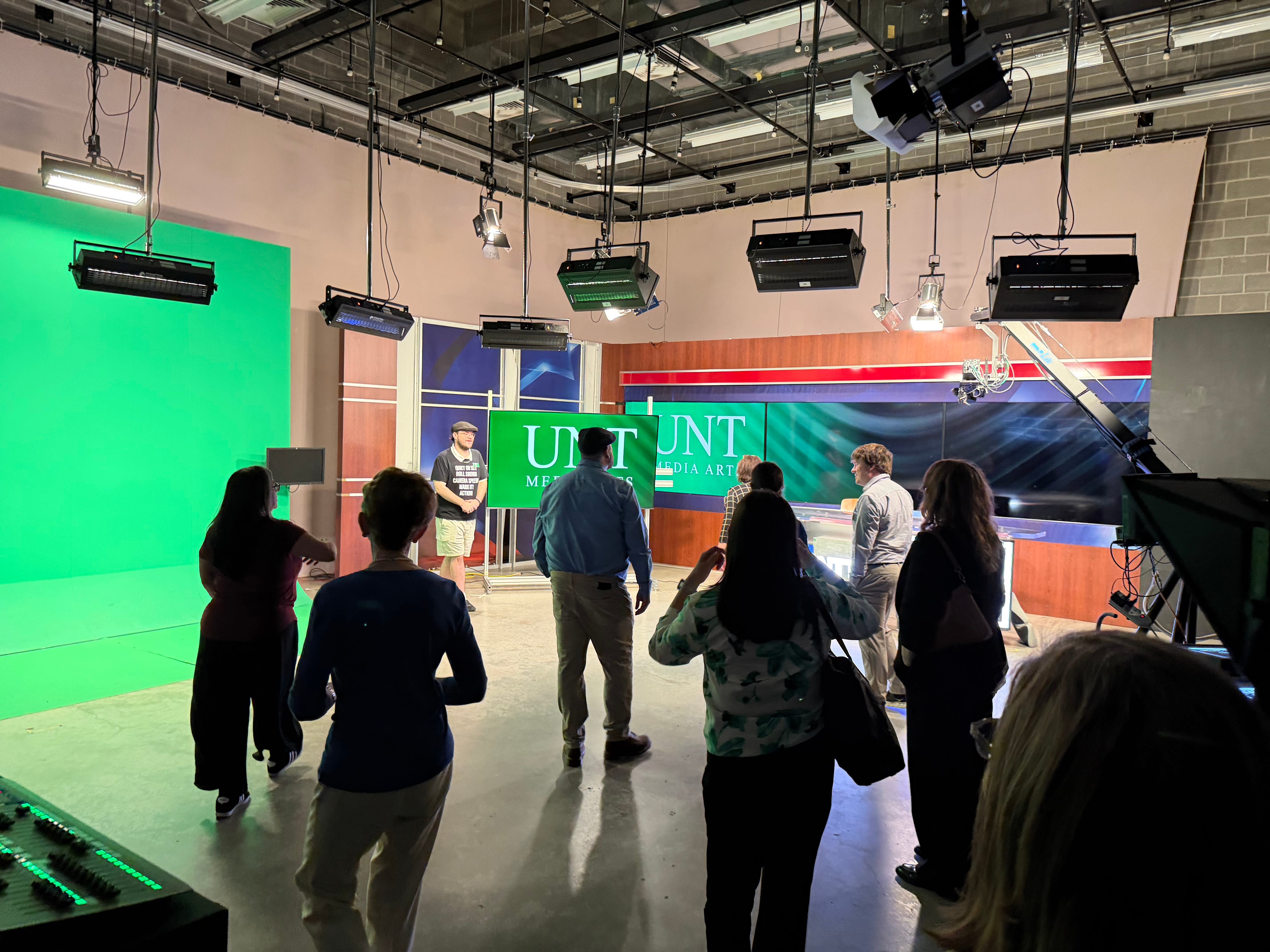
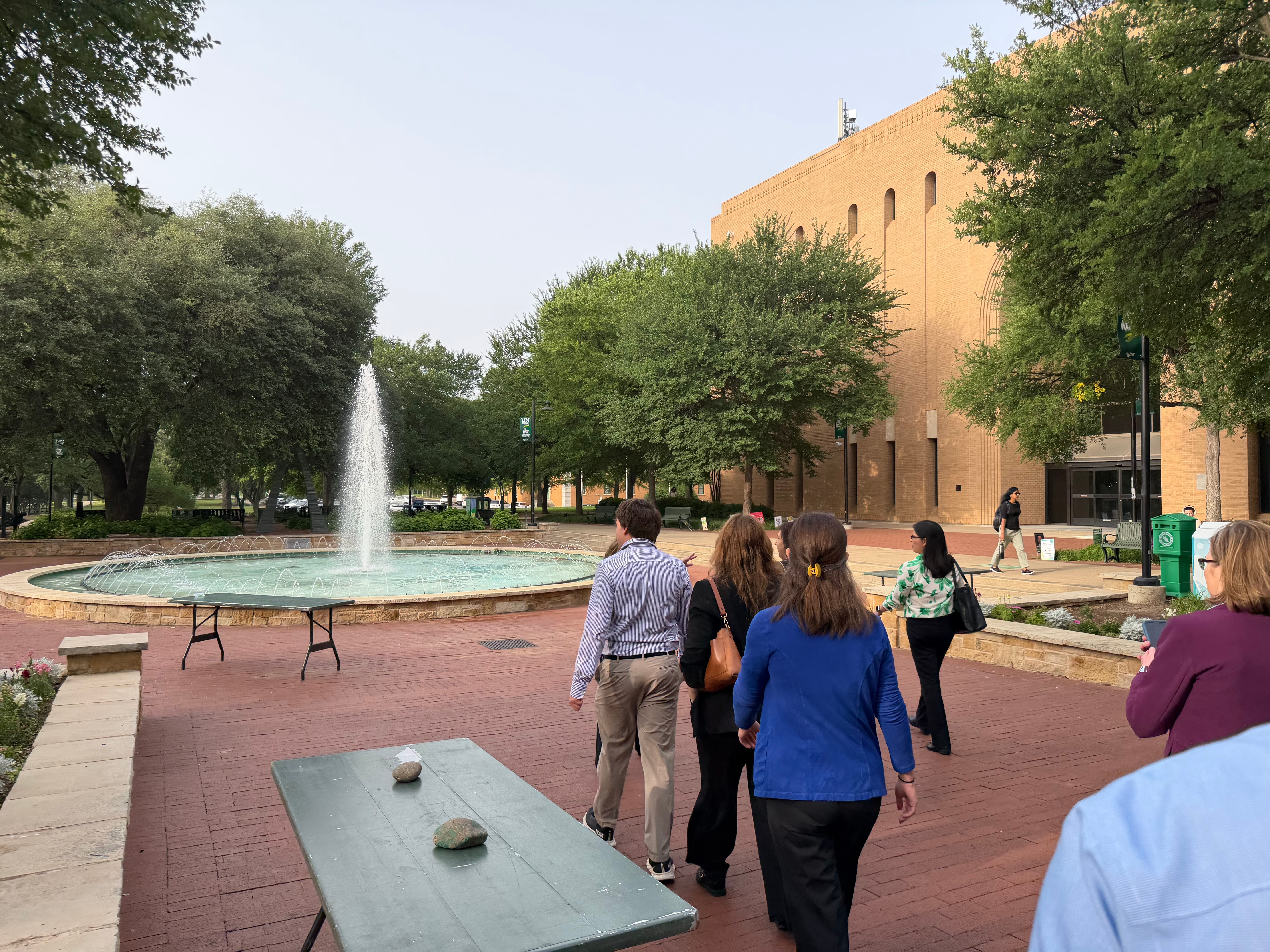
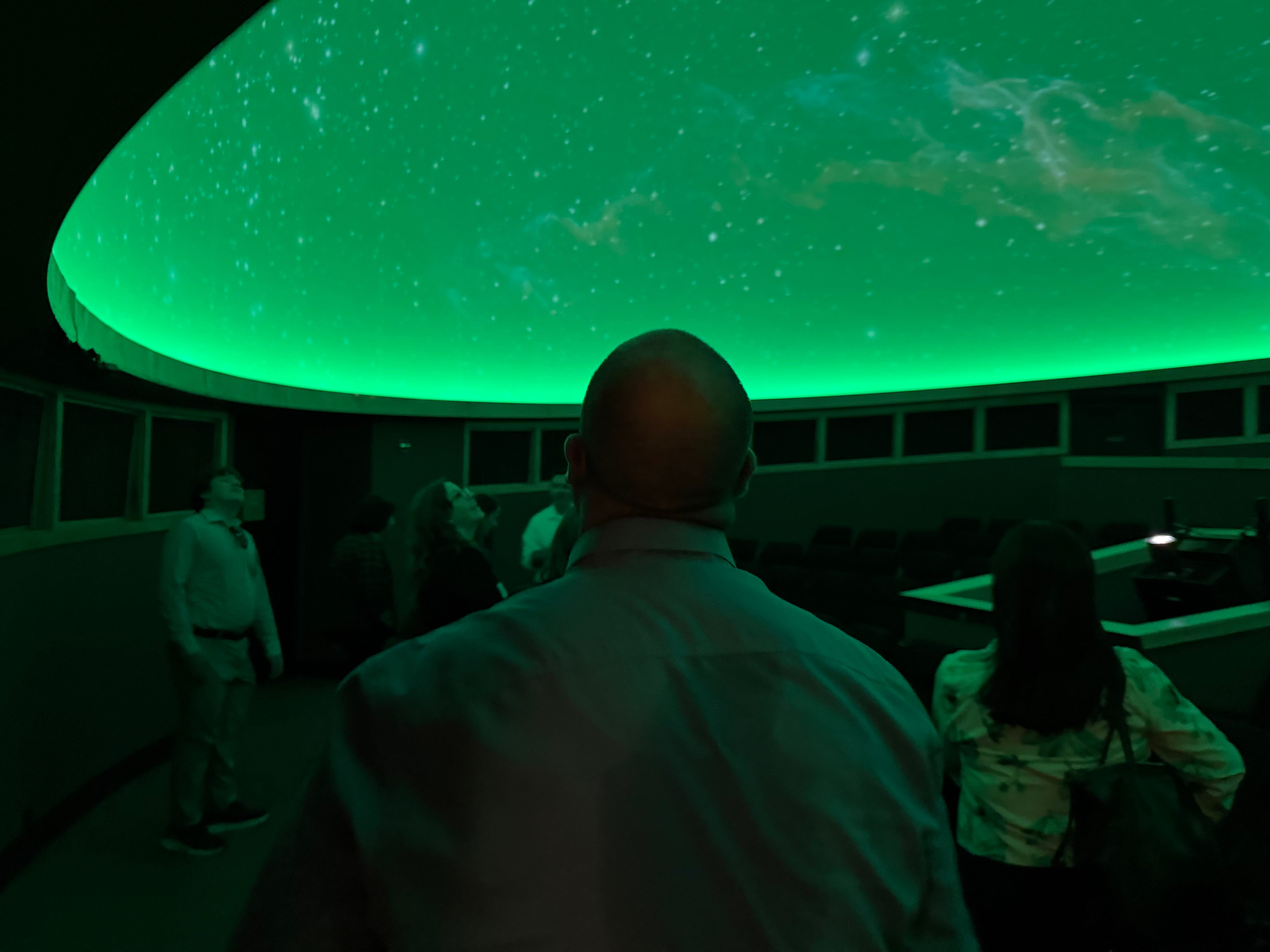
Over the last several days I had the pleasure of taking a look under the hood of the University of North Texas (UNT), a sprawling regional public institution of higher education located just north of Dallas, as part of my work at the Postsecondary Commission. A few takeaways:
Higher education is not one sector, but several sectors. If higher education were viewed like any other sector of the economy, we’d have differentiated it long ago. UNT is a completely different beast than, say, Texas State Technical College—a 2-year technical and trade college—or Yale, or UT Austin. The “product” offered by UNT is, on its face, the same as is offered by other 4-year institutions: A bachelor’s or some other equivalent credential. But the market of students served, the type of degree earned (engineering is a very different degree from music theory), and the non-skill-related value of the credential (signaling, access to new and higher net worth social capital, etc.) vary wildly. The more higher ed leaders and policymakers differentiate between institutions as they think through how the sector might be reformed, the better. As institutions stare down an enrollment plateau, declining foreign enrollment (formerly a cash cow), and other pressures, expect differentiation among institutions to accelerate, and the traditional 4-year liberal arts model to become less of a standard.
The vast majority of students do not attend private elite 4-year liberal arts colleges, despite their outsized representation in our national discourse. The average student attends a school like UNT, insulated from many of the issues plaguing our elite institutions by virtue of the sort of institution it is: Commuter students, adult learners, and the institution’s embeddedness in the local community immunize the university from the sorts of monocultures that develop at places like Harvard or Yale. This can be very positive, though I still think there is something to be said for the development of a healthy monoculture, particularly at elite liberal arts institutions: The liberal arts, to a certain extent, relies upon the creation and maintenance of a sort-of “closed society”—it will always be a semi-aristocratic endeavor.
Higher education is its own world, replete with its own culture, vocabulary, power structures, and internal dynamics. This is the second institution I’ve toured as part of an accreditation visit with the Postsecondary Commission, and it continues to strike me how much of higher education is insider baseball (and I don’t necessarily think this is a bad thing). The organizational structure of your average university is unlike any other enterprise in American society, although institutions—especially resource-constrained institutions—are coming to adopt more traditional governance models (with presidents taking on more of a CEO role and incorporating formalized faculty input with declining frequency).
Recent publications and posts
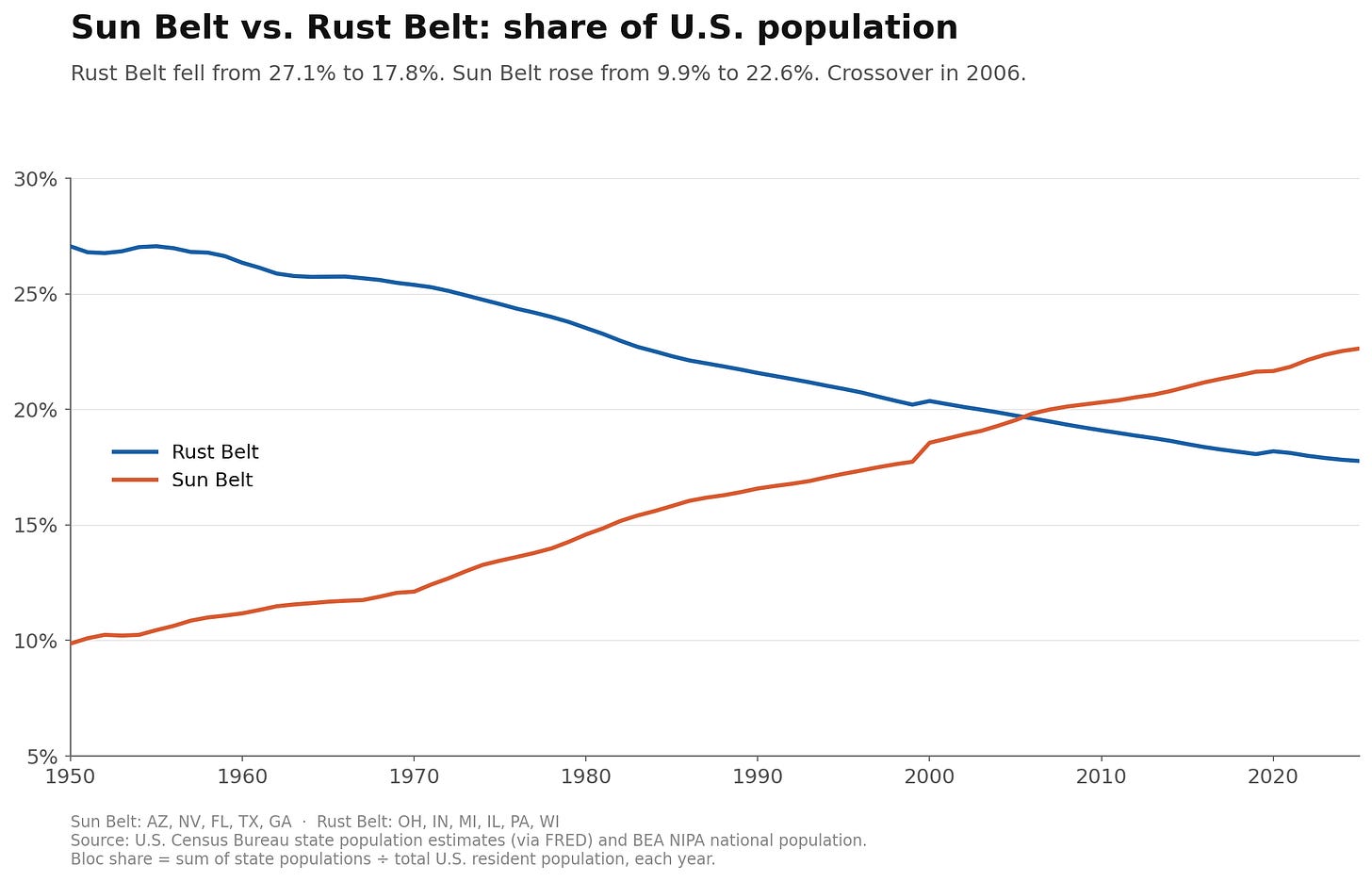
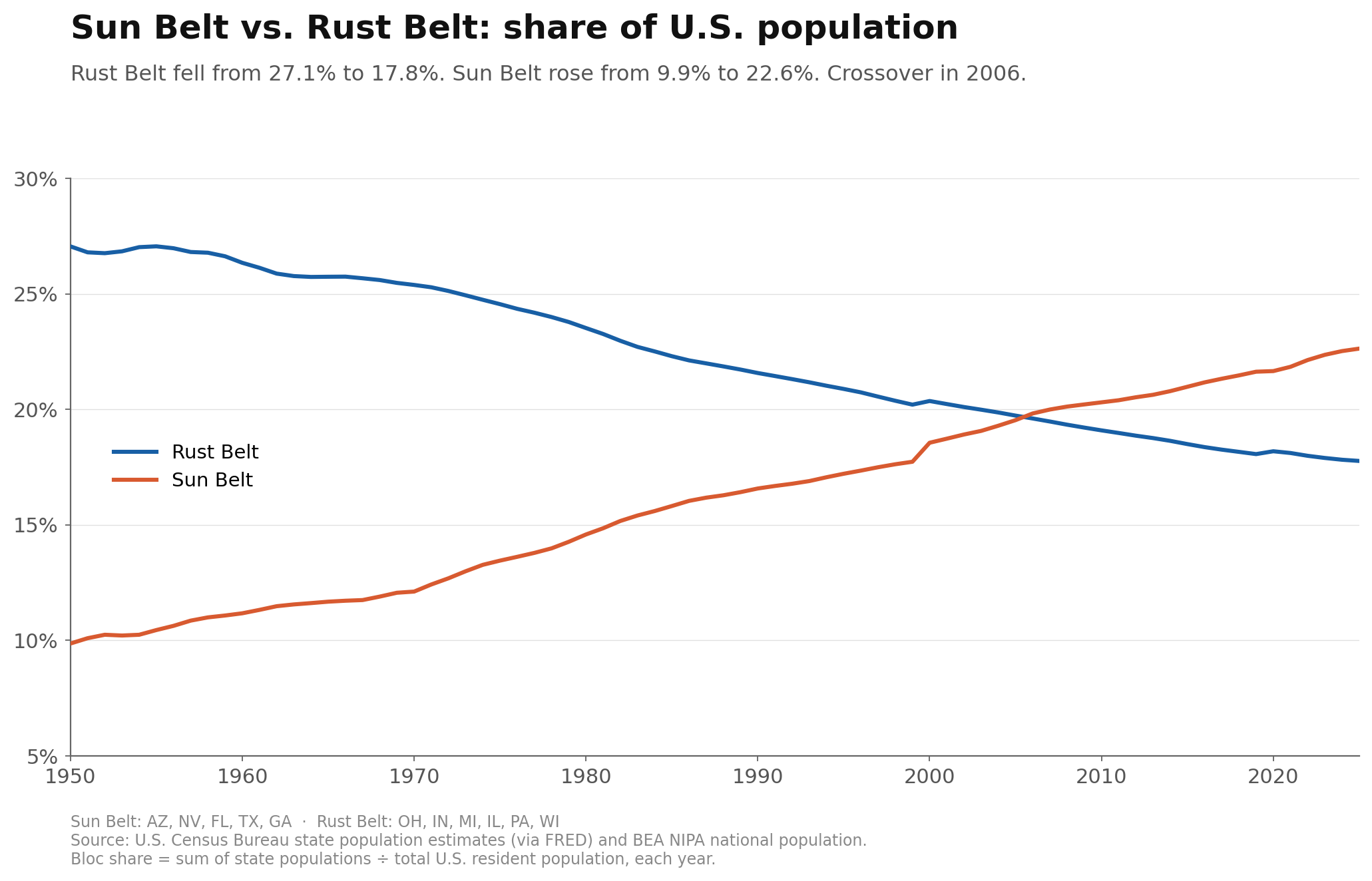
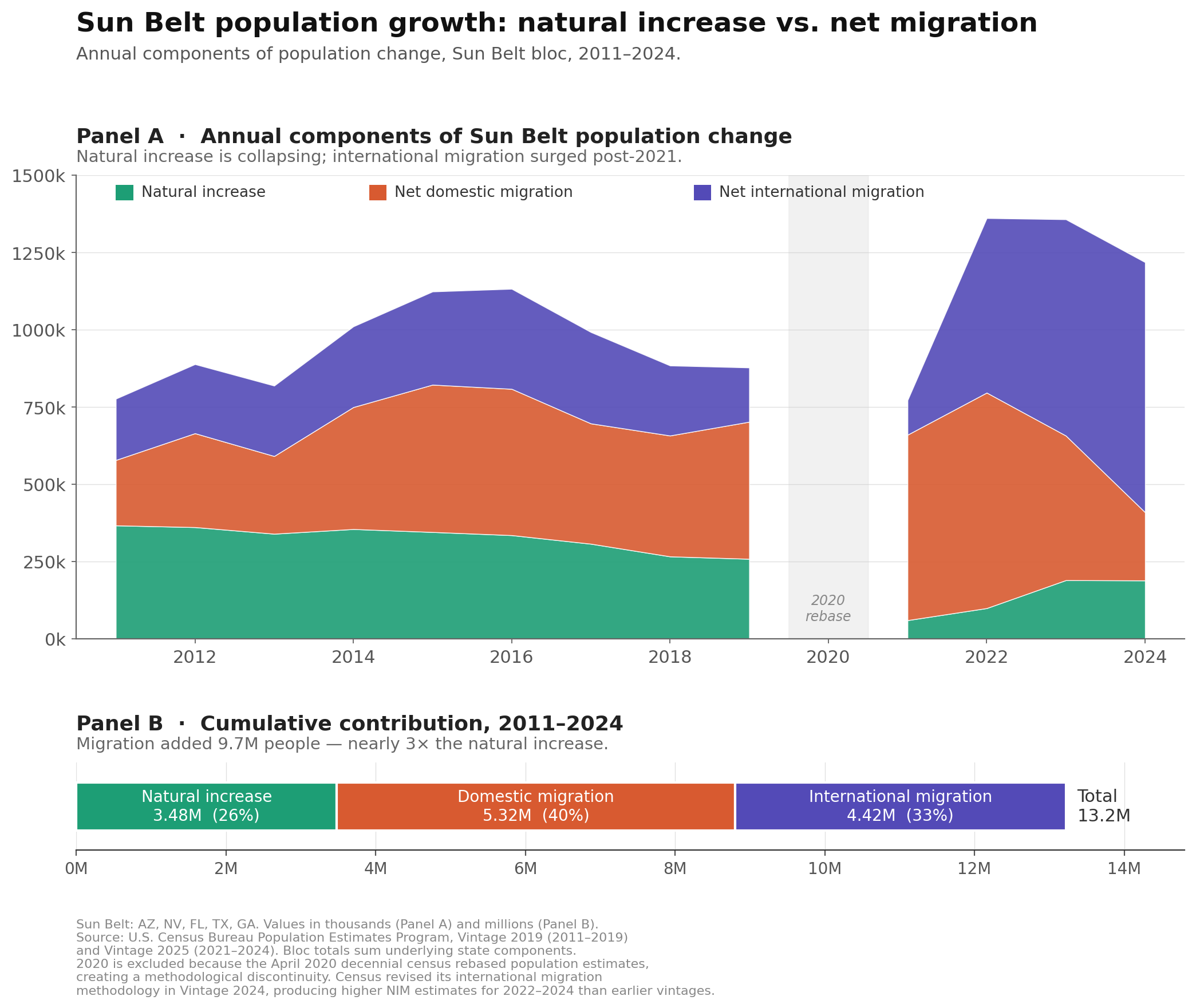
Sun Belt Rising — Not enough attention has been paid to the Sun Belt. Our national consciousness remains mired in nostalgia and continues to under-index the incredibly bright trajectory of states like Arizona, Nevada, Texas, Georgia, and Florida.
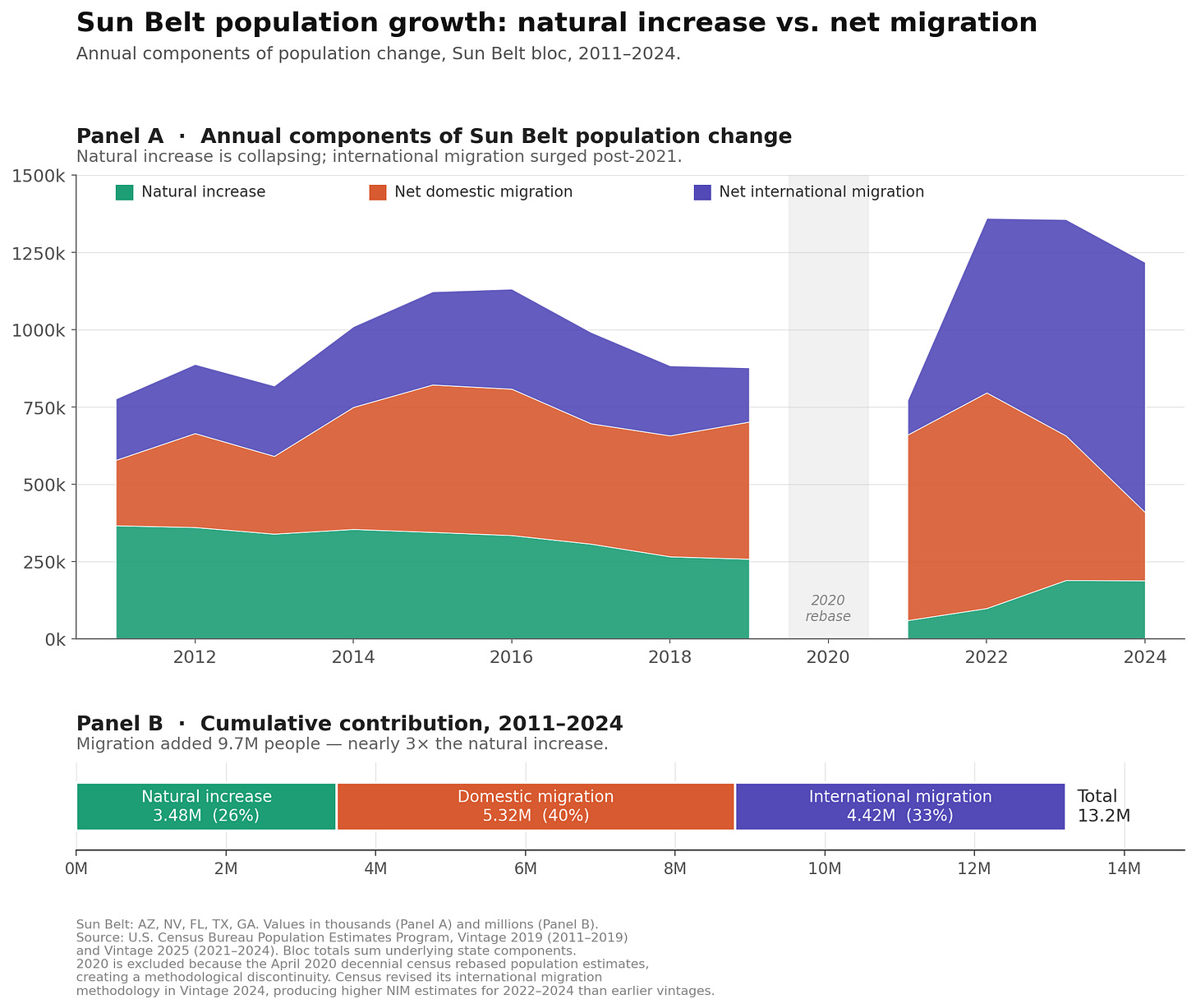
“The Sun Belt’s growth is not a pro-natalist success story. It’s mostly a story of sustained net positive migration, driven primarily by Americans leaving other states and new arrivals from abroad. The decline in natural population increase (births minus deaths) from 2011 through 2024 is not a result of declining births (these held steady, at ~840k per annum), but of more deaths (climbing from ~482k in 2011 to ~655k in 2024). I suspect this is a result of the Sun Belt’s large elderly population. A surge in international immigration in the early-to-mid 2020s—which can be presumed to have leveled off significantly given the Trump Administration’s restrictionist immigration policy—contributed mightily to more recent surges in Sun Belt population growth.”
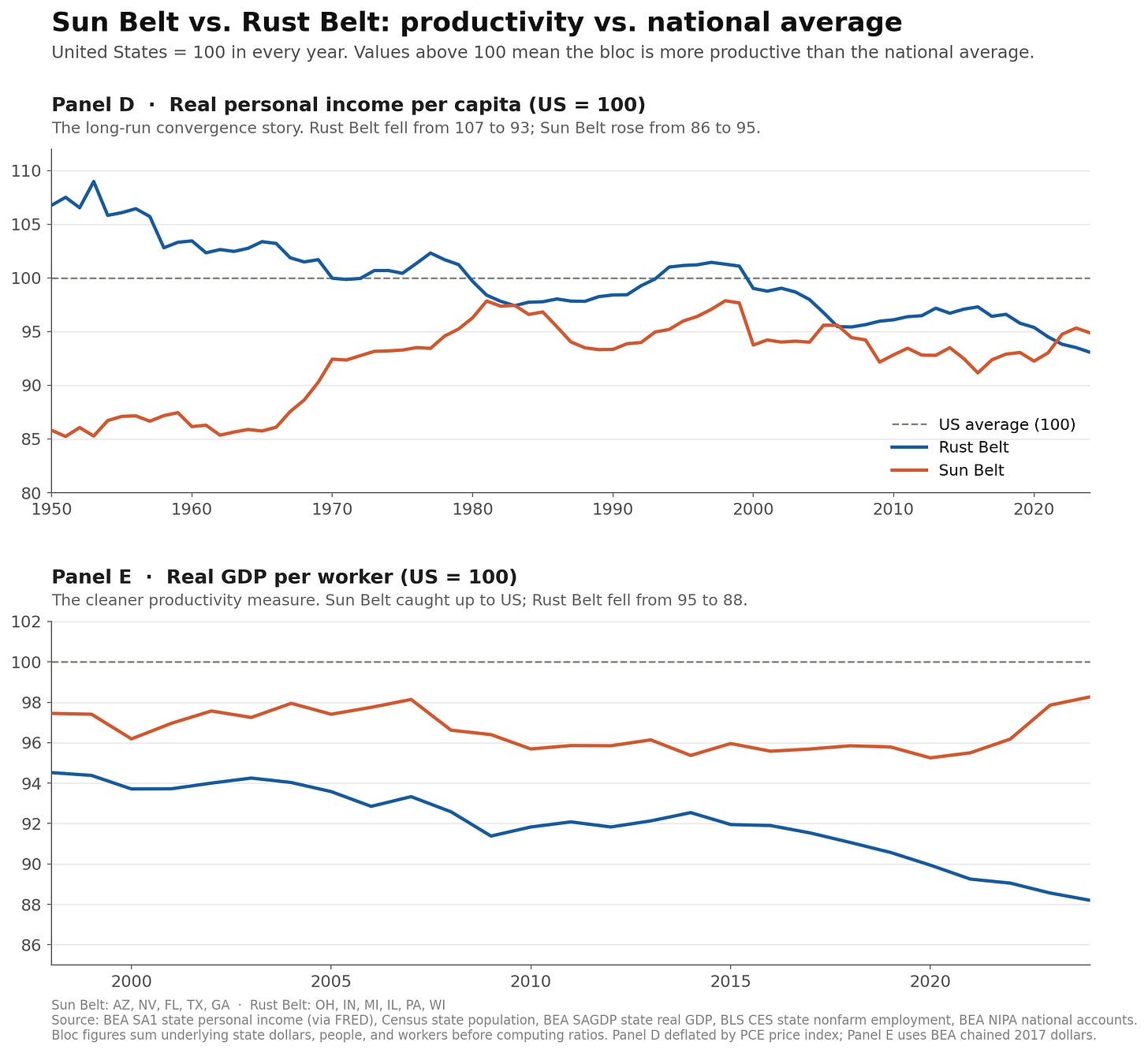
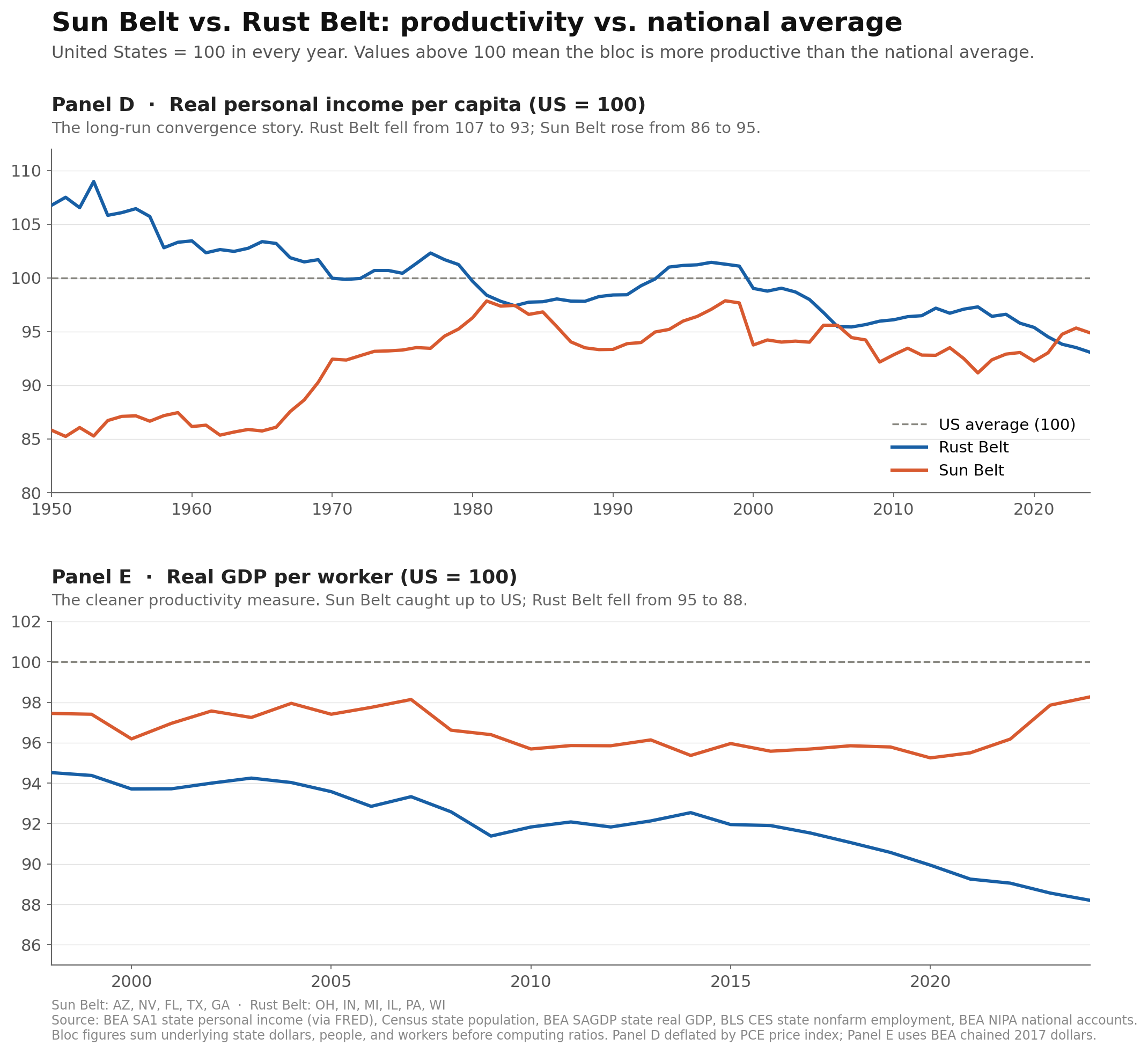
“Interestingly, Sun Belt economic growth is driven more by population growth than by gains in per-worker output. The Sun Belt is slightly more productive than the Rust Belt and has reached rough parity with the national average, but it hasn’t yet pulled ahead of U.S. national productivity. The Sun Belt closed most of its per capita income gap with the Rust Belt by the early 1980s but the two blocs then moved roughly in lockstep for decades, both stuck a few points below the national average. Real GDP per worker has improved marginally in the last quarter century compared to the national average (especially vis a vis the Rust Belt) but it still underperforms the national average.”
“Our contemporary politics is coming to be shaped by two certifiably American worldviews. Rust Belters have experienced American decline firsthand. They grew up in towns with hollowed out factories, declining populations, and a general air of pessimism. Every day, they are reminded of what was—they mourn a world lost. Their grievances are not without basis. Sun Belters grew up in places built yesterday: new suburban developments, exurbs, and skyrises. Every day they are reminded of what can be—they anticipate a world to come. If they have grievances, they are with Rust Belters, who, to them, are mired in a past that can never be restored.”


What I’m reading and listening to
“Conservatives Need a New Way of Doing Local Politics” (Craig Ruiz) — Craig, a fellow at the nascent 1912 Institute, argues that Republicans’ recent setbacks in Arizona’s Salt River Project Board elections were, ironically, the result of a successful get out the vote campaign. Instead of adopting progressive GOTV tactics, Ruiz instead encourages conservatives to bring what national policy thinkers call “Secret Congress” to the Phoenix Valley:
“That is why debates about whether the SRP electorate leans Republican or Democratic are largely a distraction. No grouping of 36,000 voters can be representative of the whole SRP electorate. Whereas national elections are decided by winning over swing voters, SRP elections and many other local elections are decided by the unusual dynamics that motivate people to turn out in ultra-low-profile contests.”
“When conservatives play the ‘groups’ game, they only trigger the progressive activist class into action. The good news is that there are proven ways that populist movements can withstand group resistance on low-profile issues.”
“For too long, conservatives have treated local politics as a base mobilization game just as progressives do. Because of their sophisticated activist network, progressives can get away with this in a way that conservatives cannot. But local politics is not simply the domain of the most highly-engaged voters and the activist groups that mobilize them. It is also a world of policymaker relationships, effective communication, bold ideas, and shared cultural values. Conservatives should harness the whole gambit of strategies available to them. The SRP election presents an opportunity to experiment with new methods of policy influence and offer Arizonans a brand of conservatism that responds to the pressing issues close to home.”
“America at 250: Our Lost Opportunity” (Robert Pondiscio) — “If we cannot give young Americans a shared national celebration, we can still give them something else: adults who absorb tension so children don’t have to; institutions that teach ideals before indictments; and educators who understand that attachment is the prerequisite, not the antithesis, of an honest reckoning.”
“New Sages Unrivalled” (Dean Ball) — “Our country was born in improvisation, and Americans are often at our best when we are improvising with little more than principles, knowledge, wisdom, and chutzpah. America has always done well by leaning into the wind, even when it blew harshly in our face. When we are at our best, we stand defiantly against the storm. And our pursuit of greater knowledge, and of our founding ideals are, in the final analysis, the only defenses we have, our sole ballasts against the gusts.”
“Lessons from State Tuition Recovery Funds for Consumer Protection in Higher Education“ (Preston Cooper & Chris Robinson) — When institutions of higher education shutter it’s mostly taxpayers who pay for resulting student loan forgiveness. Preston and Chris argue instead for, essentially, nationwide tuition recovery insurance—paid for by institutions instead of taxpayers:
“A federal common fund, inspired by state tuition recovery funds, would not reinvent the wheel. Twenty-two states have operated versions of this model for years, with mixed but instructive results. The ITT and Corinthian closures showed what happens at the federal level when there is no equivalent backstop: Billions of dollars in discharged loans land on taxpayers who had no say in how those institutions were run. A common fund could shift those costs where they belong—onto the institutions drawing from the federal loan system in the first place.”
“Hope or Hype? What to Make of Yale’s Report on Trust in Higher Ed“ (Rick Hess) — “In short, it’s far too early for higher ed reformers to proclaim victory. Yale’s report is a promising chapter, but most of this tale is yet to be written.”
“The Hobbit” (J.R.R. Tolkien) — The Hobbit needs no explanation.
“The university that doesn’t exist yet” (Gad Levanon) — “The disruption to higher education is not that AI replaces universities. It is that AI may make possible a new kind of institution — cheaper, leaner, faster, and eventually credible enough — that can outcompete a large part of the market. That would be painful for many existing colleges precisely because, for many students, it could be a better deal.”
Some photos from Arizona
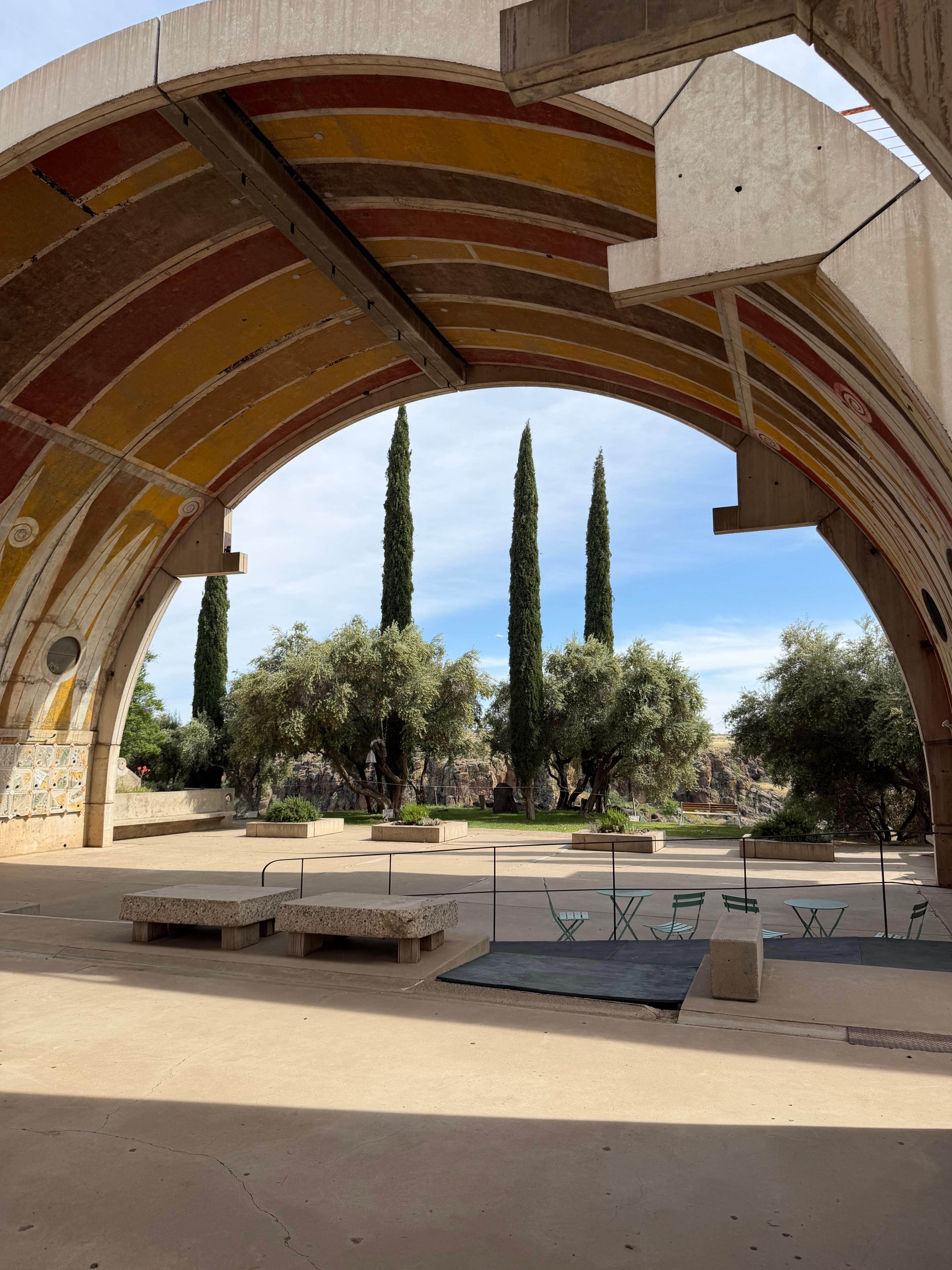
Arcosanti, Arizona. An artists’ colony.

The Arizona Biltmore. Phoenix.

Construction in Tempe, Arizona.
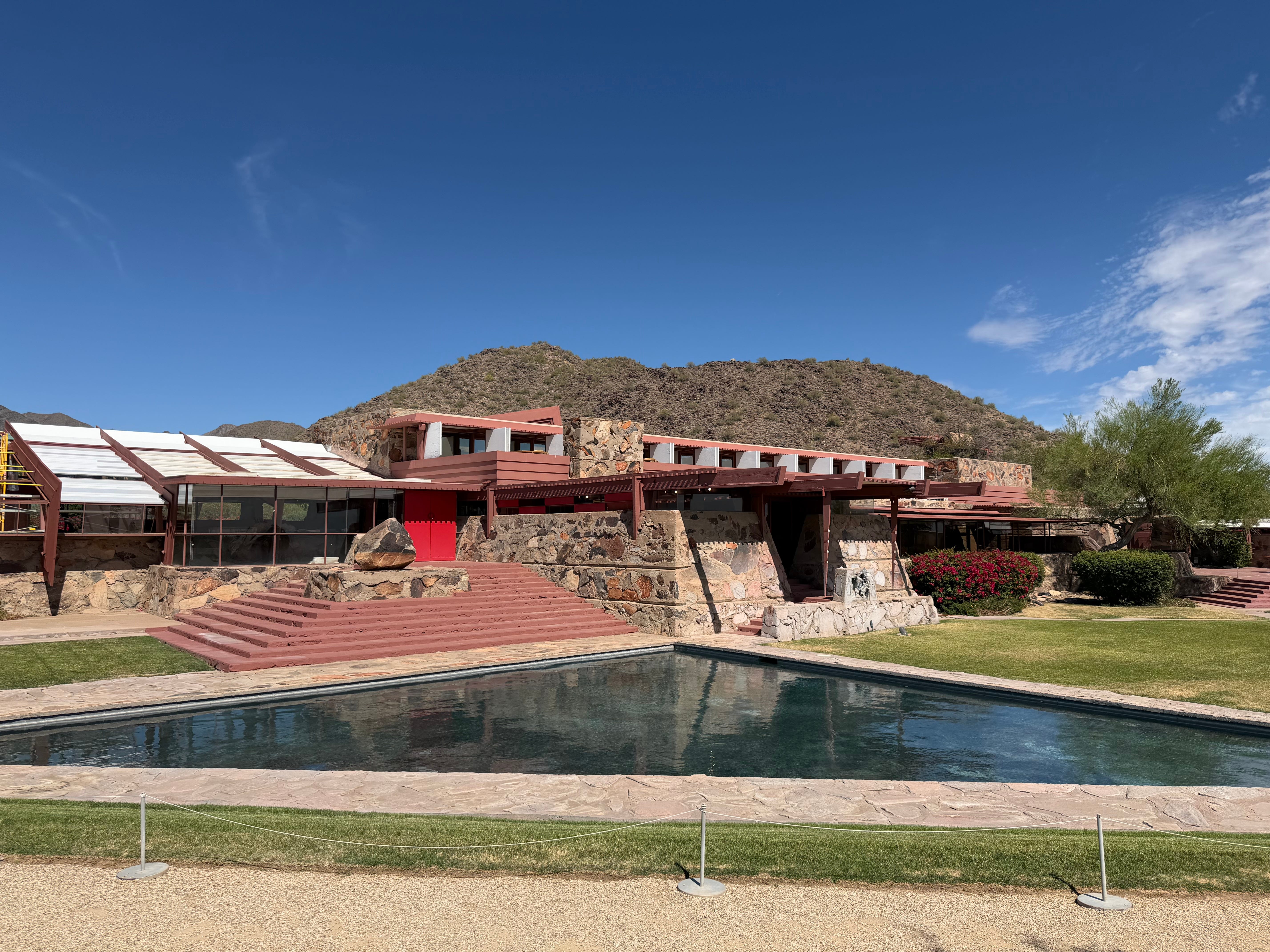
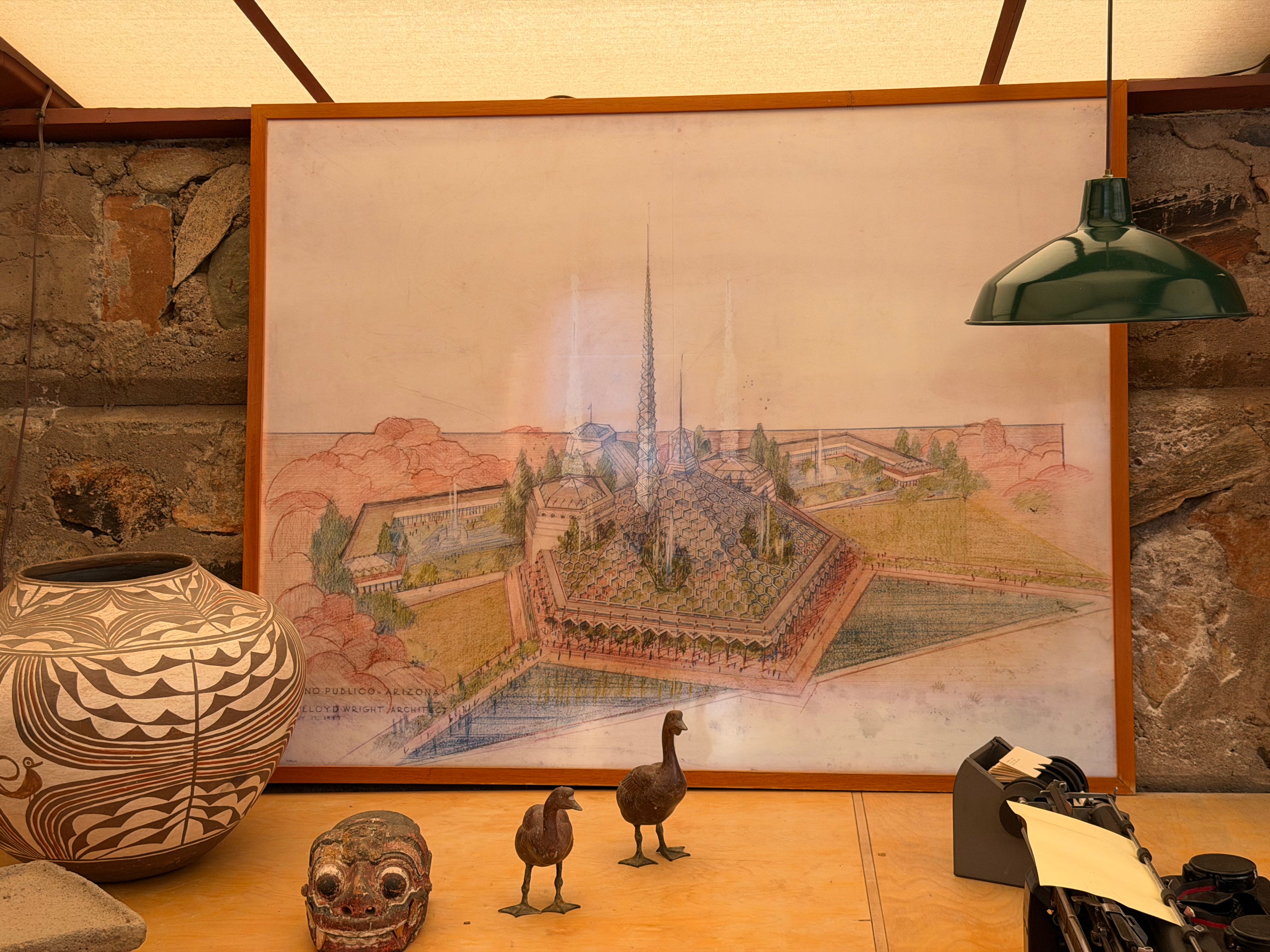
Taliesen West. Designed by Frank Lloyd Wright.