


Good afternoon and a belated happy Memorial Day! Over the last month, I’ve travelled a bit, published an essay for The Dispatch, and consumed plentiful content (perhaps too much). Without further ado:
Preview: The Movement to Revamp Civics
As America nears her quarter-millennium birthday, her citizens are remarkably pessimistic and disillusioned about the American Dream. A record number of us no longer anticipate high-quality lives in the near future. Institutions integral to our functioning and way of life—courts, the financial system, public schools, universities—have lost the faith of most Americans. Our major political parties continue to diverge ideologically, with a majority of those under 45 saying that it’s important to date or marry someone with similar political views.
These trends, coupled with a general malaise that most of us feel but struggle to articulate, have led Paul Carrese to ask what we’ve all been thinking: “Is it too late for America?”
Carrese is the author of a new book, Teaching America: Reflective Patriotism in Schools, Colleges, and Culture. (Full disclosure: Paul was a professor of mine and continues to be a close friend and mentor.) After spending his career in academia contributing to civic education—first, as director of the United States Air Force Academy’s academic honors program, and then as the founding director of Arizona State University’s School of Civic and Economic Thought and Leadership (ASU SCETL)—Carrese used a sabbatical to collect his thoughts and write them down. Carrese is what you might call a self-aware academic: quick to acknowledge the enormous privilege he and other residents of the Ivory Tower have been afforded; profuse in his thanks to parents, students, and taxpayers for extending this opportunity. Teaching America is the culmination of his lifelong ambition to contribute to America’s civic flourishing.
When Carrese asks whether it’s too late for America, anyone who knows him knows it’s an almost-rhetorical question. There is something in him—a mix of Christian hope and old-school Yankee optimism—that refuses to believe in American decline. But to understand Carrese’s carefully considered hope, which he distinguishes from blind optimism, we must first understand where he thinks American civic education has gone wrong, and why the poor state of that education is so intimately tied to our national malaise. […]
What I’m Reading/Listening To
Why Your Best Ideas Aren’t Original (David Epstein, Derek Thompson): “The great bottleneck of progress is question-framing. Once a problem is framed with sufficient clarity and precision, the answer almost wants to be found. Once Malthus articulated his grim theory of resource scarcity and competition precisely enough, two scientists on opposite sides of the world arrived at the same revolutionary solution within years of each other. The answer was, in some sense, already waiting.”
Here are the undergraduate programs that pay off (and some that don’t) (Todd Wallack): “The biggest payoffs for students seeking bachelor’s degrees occurred in engineering and architecture, business and economics, and security and protective services degrees. Liberal arts, recreation and fitness studies, and social sciences students saw the lowest returns among the categories included in the report.”
The Part of the Declaration Nobody Reads (Eli Lake): “We don’t do this for light and transient causes—that’s in the document. Whether or not it’s actually about taxes, they don’t want the world to think that’s what the American Revolution is all about.”
Douthat: Pope Leo’s Election Suggests ‘American Situation’ Is the Church’s Future (Jonathan Liedl): “The Church in America’s ability to ‘compete’ amidst pluralism and cultural conflict may be a model for Catholics worldwide, ‘The New York Times’ commentator told EWTN News.”
More Colleges Are Closing. It’s About Time (Roland Fryer): “A common objection is that earnings are too narrow a measure. Many argue that college produces transformation, citizenship, character—things a wage record can’t capture. They’re right that earnings aren’t everything. But they’re wrong that the closing schools have any comparative advantage in producing them. The Gallup-Purdue Index, surveying more than 30,000 graduates on workplace engagement and life satisfaction, finds that institutional type—private vs. public, selective vs. not—explains almost none of the variation. The same is true for civic engagement, marriage and health.”
Elite graduates are pulling back from grad school (Gad Levanon): “In 2003, the best-selling career advice told ambitious college seniors to go to law school, med school, or business school within a few years of graduating. Today the share of graduates from America’s most selective colleges who start graduate school within five years of finishing their bachelor’s degree has dropped almost 10 percentage points — from about 51% to 41%. At less-selective schools, the rate is flat.”
Is Miami a Failure of the Assimilation Model? (Gil Guerra): “Miami presents a challenge for conservative assumptions about politics and culture. No American city is more emblematic of recent GOP gains with Hispanic voters: Donald Trump carried Miami–Dade County in 2024 by 11 points, a staggering swing from Hillary Clinton’s 30-point margin in 2016. But Miami’s apparent incorporation into the Republican coalition has not settled the deeper question of whether the city’s Hispanic majority has assimilated into the American mainstream, or is merely a parallel Spanish-speaking community that happens to vote Republican.”
What an Ivy League Education Really Gets You (Rose Horowitch): “So the people who go to the fanciest colleges tend to have the most successful careers—this is not exactly news. The question of why this is the case, however, is surprisingly tricky to answer. Perhaps the super-achieving and super-privileged teens who get into Princeton would have thrived after college no matter where they went. Maybe (hear me out) they owe their success to the academic lessons imparted by world-class faculty. Or the answer could just be that employers are dazzled by the name of the school on the diploma.“
The University That Chose to Shrink (Kate Hidalgo Bellows): “At a time when most colleges are chasing enrollment gains to shore up finances, Arizona is doing the opposite. In the fall of 2025, the first-year class shrank by nearly one-fifth — a change that leaders describe as intentional. The president and provost felt that too many freshmen were coming in unprepared. They wanted to increase the graduation rate, which is lower than that of any of Arizona’s mutual peers. And they wanted to decrease how much financial aid was being doled out to students who weren’t from Arizona.“
Harvard’s ‘Annoying Socratic Gadfly’ Takes a Victory Lap (Evan Goldstein, Len Gutkin): “Harvey C. Mansfield spent six decades championing lost causes. At 94, he’s suddenly winning.”


Recent Travels and Updates
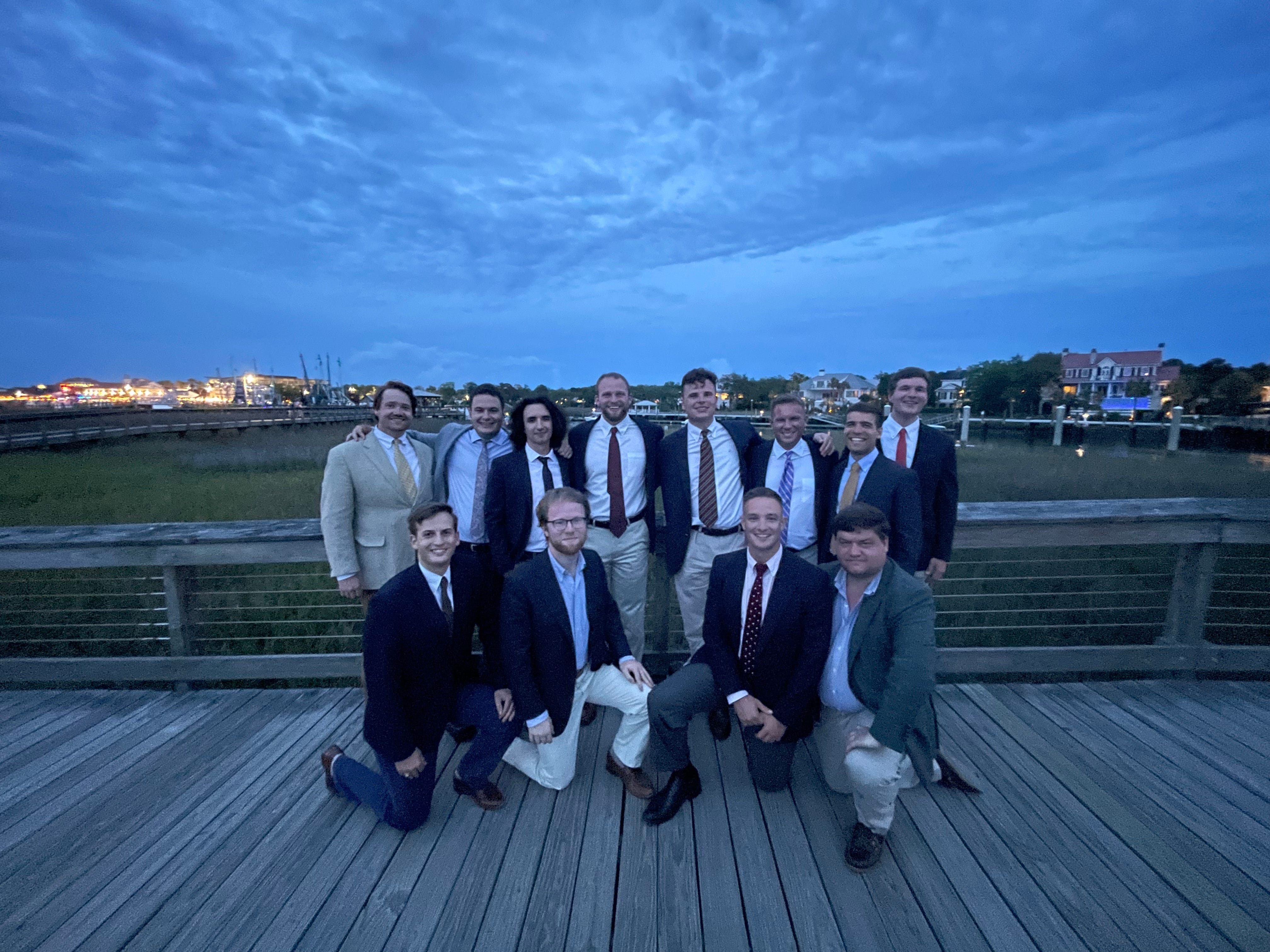

I was in Charleston, South Carolina over Memorial Day weekend for a good friend’s bachelor party. It was great fun—and I got to see Fort Sumter from the water!
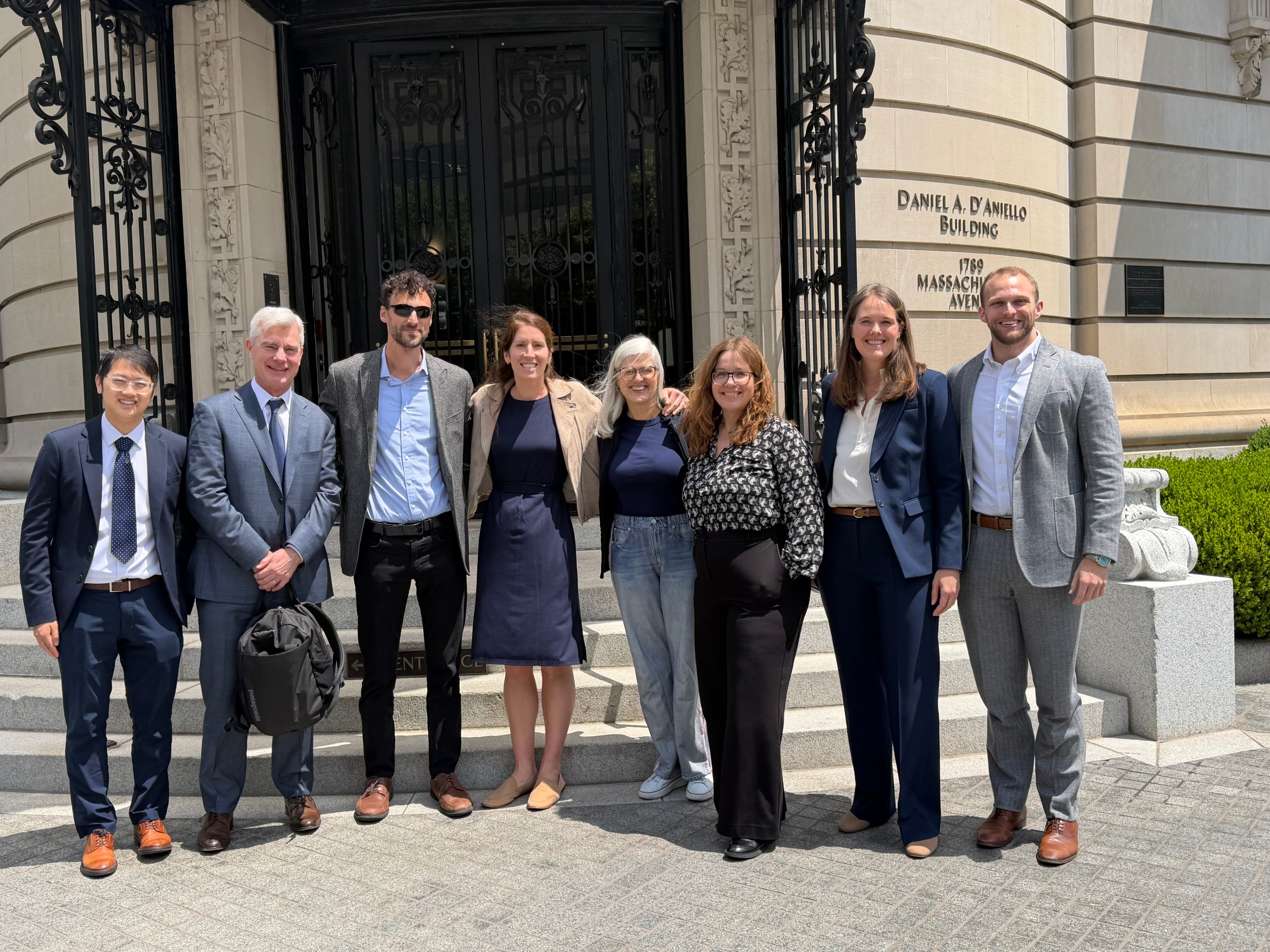

On Thursday, May 14 the Postsecondary Commission released its study examining the value-added earnings outcomes of students enrolled in Texas public higher education at an event hosted by the American Enterprise Institute in Washington, DC.
The study examines the outcomes of 935,767 students who enrolled in 86 public institutions in Texas between 2008–09 and 2018–19 and pursued a bachelor’s degree, associate’s degree, or certificate.

I recently took a daylong weekend trip to Middleburg, Virginia. It’s a hidden gem.
I spent a weekend in New York City, and attended a characteristically NYC party.
Nice work Joe.